A website for brand presentation, a product catalog, and direct online sales
We created a Ukrainian-language online store for a manufacturer of leather and other materials.
The website combines a brand presentation, a product catalog, detailed product pages, and the ability to place orders online.
The project is optimized for mobile devices and has the potential to evolve into a channel for retail sales, working with wholesale buyers and corporate clients, and handling orders for customized products.
Language of the first version: Ukrainian
Launch timeline: 14 days
Platform: WordPress + WooCommerce + Elementor
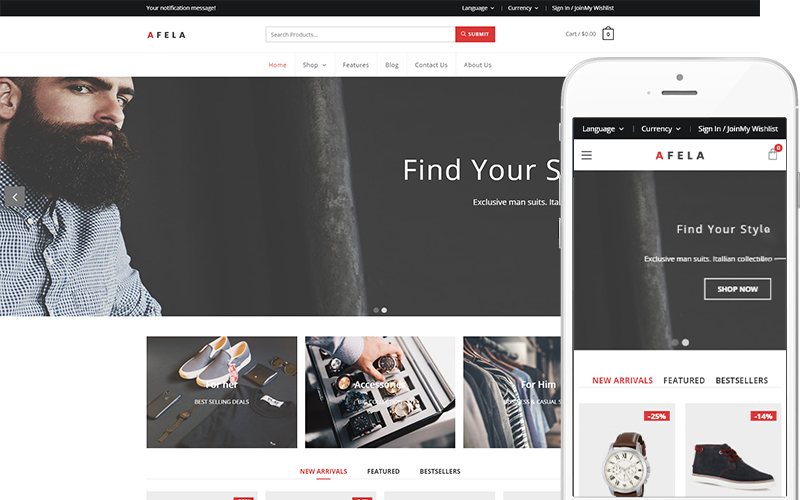
Design template: premium design from Template Monster Afela – Theme for Fashion Shop WooCommerce Theme.
View Demo
Task
A manufacturer of leather accessories needed a website that would help:
- present your own brand professionally;
- display the product lineup;
- accept orders directly from customers;
- showcase the materials, components, and quality of workmanship;
- organize products by category;
- show different product options;
- work properly on smartphones;
- lay the groundwork for SEO promotion;
- run ads for specific categories and products;
- develop wholesale and corporate sales;
- gradually expand the product range.
It was important to quickly launch a fully functional online store without having to spend a long time developing standard e-commerce features from scratch.
Our Approach
For the launch, we used a professional design template created for stores selling clothing, accessories, and products with a strong visual component.
This allowed us to focus not on creating standard blocks from scratch, but on more important tasks:
- directory structure;
- brand presentations;
- product pages;
- large photos;
- mobile optimization;
- placing an order;
- the ability to display product options;
- preparation for further advancement.
The premium template serves as a technical and visual foundation that can be adapted to a specific manufacturer’s brand identity, materials, product range, and positioning.
Why Does a Manufacturer Need Its Own Online Store?
A manufacturer can sell its products through:
- stores;
- dealers;
- marketplaces;
- social media;
- exhibitions;
- partner retail locations.
But having your own website allows you to:
- manage the brand’s image;
- independently determine the product lineup;
- show products in detail;
- explain the characteristics of materials;
- receive orders without intermediaries;
- build your own customer base;
- test new models;
- launch collections;
- work with repeat sales;
- develop the wholesale segment;
- handle corporate inquiries;
- reduce dependence on third-party platforms.
A manufacturer’s own online store becomes a digital asset that can be developed alongside the brand.
A website should sell more than just a product
A buyer evaluates more than just the accessory’s appearance.
The following factors may be important in making a decision:
- material;
- workmanship;
- hardware;
- dimensions;
- capacity;
- functionality;
- color;
- care instructions;
- service life;
- origin of the products;
- customization options;
- shipping terms;
- warranty;
- reviews.
Therefore, a manufacturer’s online store should not just display a photo and a price, but help customers understand the value of a specific product.
Directory Structure
The catalog can be expanded to reflect the manufacturer’s actual product range.
For example, some categories might include:
- bags;
- wallets;
- belts;
- backpacks;
- covers;
- cardholders;
- keyholders;
- covers;
- organizers;
- accessories;
- gift sets;
- products for businesses;
- new collections;
- Discounted items.
Additionally, products can be categorized by:
- purpose;
- material;
- color;
- in size;
- style;
- article;
- by type of use;
- at the cost of;
- collection.
The right structure makes it easier for shoppers to make a selection and lays the groundwork for SEO promotion of specific product categories.
SEO Fundamentals for an Online Store
For search engine optimization, it’s not enough to optimize just the home page.
Potential buyers may be looking for:
- leather accessories;
- leather goods;
- bags from a Ukrainian manufacturer;
- leather wallets;
- belts;
- gift sets;
- handmade accessories;
- corporate gifts;
- personalized products;
- a specific type of product;
- a product of a certain color or material.
Therefore, the website can be developed gradually through:
- categories;
- subcategories;
- product cards;
- collection pages;
- pages of content;
- gift sets;
- pages for corporate clients;
- informational articles;
- care instructions;
- pages tailored to seasonal demand;
- internal linking;
- external publications.
This approach helps attract people based on specific product searches and gradually reduce dependence on paid advertising.
What the client received
- a Ukrainian-language online store;
- mobile optimization;
- product catalog;
- product categories;
- product cards;
- shopping cart;
- placing an order;
- the WooCommerce management system;
- the ability to add products on your own;
- the ability to change prices, descriptions, and photos;
- customer accounts;
- order history;
- a basis for a wish list;
- the ability to display product options;
- payment, shipping, and return pages;
- a foundation for SEO;
- readiness to launch the ad campaign;
- the ability to integrate analytics;
- a platform that can be further developed or handed over to another team.
Product Card
For a leather product, the product card should show not only the overall appearance but also the details.
You can display the following in it:
- title;
- photos taken from different angles;
- close-ups of the material and seams;
- video;
- price;
- availability;
- colors;
- dimensions;
- material;
- type of hardware;
- configuration;
- internal organization;
- weight;
- Directions for use;
- care instructions;
- warranty terms;
- production lead times;
- shipping terms;
- reviews;
- Similar products.
If a product has variations, the buyer can choose:
- color;
- size;
- material;
- configuration;
- type of hardware;
- personalization.
Manufacturer’s Presentation
For your own brand, it’s important to show who makes the products and how they’re made.
You can post the following on the website:
- the brand’s history;
- information about production;
- command;
- workshop;
- the process of manufacturing products;
- principles for selecting materials;
- quality control;
- photos of the production process;
- video;
- the company’s values;
- information about the Ukrainian origin of the products;
- certificates and documents, if any.
This helps distinguish the manufacturer from stores that simply resell other companies’ products.
Materials and Specifications
A buyer may not understand the difference between materials, finishes, and hardware.
Therefore, the website can explain:
- what materials are used;
- how they differ;
- how they behave during use;
- how they change over time;
- how to care for the surface;
- what to avoid;
- how to store the product;
- how to choose the right size;
- What are the distinctive features of handcrafted work?
It is important to use the exact specifications for a particular product and not to attribute properties to materials that the manufacturer cannot confirm.
Visual presentation of products
For accessories, photos directly influence purchasing decisions.
It’s helpful to show:
- overview;
- the product in use;
- scale relative to a person;
- internal departments;
- hardware;
- fasteners;
- seams;
- the texture of the material;
- packaging;
- various colors;
- Examples of personalization.
A single photo against a white background doesn’t always give you a good sense of the product’s size, capacity, and actual appearance.
Options and Customization
One potential area of development could be the personalization of products.
You can offer the customer:
- color selection;
- selection of hardware;
- initials;
- name;
- logo;
- individually packaged;
- a gift card;
- a set consisting of several items;
- Custom manufacturing.
On this page, it is important to explain:
- what options are available;
- how much does it cost;
- What is the production time?;
- Can I return a personalized item?;
- how to submit text or a logo;
- how the layout is approved.
Gift Items
Leather accessories are often bought as gifts.
To do this, you can create collections:
- a gift for a man;
- a gift for a woman;
- a gift for a manager;
- a gift for a coworker;
- a gift for a partner;
- a holiday gift;
- an anniversary gift;
- gift sets;
- personalized products;
- Gifts within a specific budget.
These pages can be used in:
- SEO;
- advertising;
- social media;
- email;
- seasonal campaigns;
- corporate offers.
Corporate Orders
A separate category can be created for companies that need:
- branded accessories;
- gifts for employees;
- gifts for partners;
- gift sets for customers;
- products for events;
- products with a logo;
- special packaging;
- mass production.
A corporate page may include:
- product samples;
- available branding methods;
- minimum volume;
- dates;
- packaging options;
- examples of completed orders;
- request form;
- the option to upload a logo;
- Request for a Commercial Proposal.
This approach could lead to larger orders and reduce dependence on retail sales.
Wholesale Division
You can create a separate proposal for:
- stores;
- showrooms;
- retail chains;
- marketplace for sellers;
- corporate suppliers;
- regional partners;
- distributors.
The wholesale section may include:
- terms of cooperation;
- minimum order;
- available product range;
- wholesale prices;
- production lead times;
- documents;
- packaging options;
- regularity of deliveries;
- request form;
- Downloadable catalog.
Payment and Shipping
An online store can be connected to:
- online payments;
- cash on delivery;
- bank transfer;
- delivery services;
- courier delivery;
- pickup;
- automatic order notifications;
- status tracking.
It’s important to explain the following clearly on the website:
- shipment dates;
- production lead times for custom-made goods;
- payment methods;
- shipping cost;
- verification rules;
- terms of exchange;
- return policy;
- Features of personalized products.
Product Feeds and Advertising
As the store develops, it can be set up to transmit product information to:
- Google Merchant Center;
- Google product ads;
- Meta catalog;
- dynamic remarketing;
- marketplaces;
- affiliate platforms.
A product feed may contain:
- title;
- link;
- a photograph;
- price;
- availability;
- brand;
- category;
- description;
- Specifications.
This helps automate the promotion of the product lineup and the updating of information following changes to the website.
The Role of Social Media
Instagram, Facebook, Pinterest, YouTube, and TikTok can be used for:
- demonstrations of new products;
- the production process;
- close-ups of materials;
- personalization;
- order packing;
- care instructions;
- the brand’s history;
- reviews;
- gift sets;
- seasonal collections;
- links to product pages.
Social media creates a sense of connection and fosters regular interaction, while the website provides comprehensive information and accepts orders.
Site 4 biz Growth can integrate an online store, SEO, content, product advertising, social media, email, and analytics into a single sales system.
Content for the Brand
Content can help not only drive search traffic but also explain the value of a product.
These could be articles about:
- choosing an accessory;
- product care;
- differences in materials;
- product development;
- choosing a gift;
- personalization;
- creating a masculine or feminine look;
- accessory combinations;
- corporate gifts;
- the history of individual models;
- New collections.
A single piece of content can be adapted for use on a website, social media, email, and advertising campaigns.
Resale
A customer may return an item for:
- a new model;
- a product of a different color;
- a gift;
- as a set;
- an accessory;
- seasonal collection;
- replacing an old product;
- products for corporate orders.
To achieve this, the store can be developed through:
- wish lists;
- email;
- news updates;
- abandoned shopping carts;
- loyalty program;
- bonuses;
- promo codes;
- personal collections;
- reminder;
- gift certificates;
- retargeting.
Communication should be conducted with the client’s consent and should be helpful, not excessive.
Expansion into International Markets
For a Ukrainian manufacturer, a website can serve as the foundation for international expansion.
The next steps could be:
- multilingualism;
- specific currencies;
- international shipping;
- international payment methods;
- English-language pages;
- SEO for other countries;
- manufacturers’ catalogs;
- Etsy or other marketplaces;
- working with international partners;
- pages for wholesale buyers;
- international advertising campaigns.
Before launching, you need to check logistics, payment, tax requirements, and return policies separately.
How to Further Develop the Website
The next steps could be:
- expanding the catalog;
- new collections;
- filters;
- product variants;
- personalization;
- online payment;
- integration with delivery services;
- balances synchronization;
- integration with CRM;
- product feeds;
- Google Merchant Center;
- Meta Ads;
- dynamic remarketing;
- wish lists;
- gift certificates;
- loyalty program;
- wholesale section;
- corporate orders;
- multilingualism;
- international sales;
- SEO;
- blog;
- video content;
- email automation;
- Integration with marketplaces.
The specific direction of development depends on the product range, production volumes, sales model, and the brand’s plans.
How the customer saves money in the future
Using a professional e-commerce platform allowed us to avoid spending time and money on building standard online store features from scratch.
The customer saves:
- time required for the initial startup;
- budget for basic development;
- costs associated with mobile adaptation;
- time to develop new products and categories;
- funds for a complete overhaul in connection with the expansion of the product line;
- expenses for individual websites for the retail and wholesale segments;
- the time it takes to find a developer for routine updates;
- a budget for future SEO thanks to a scalable structure;
- the costs associated with a closed platform that is difficult to transfer to another team.
The website can evolve gradually alongside production, new collections, the team, and sales channels.
Why We Chose a Premium Design
Online accessory stores have many common features:
- catalog;
- categories;
- product cards;
- large photos;
- product options;
- shopping cart;
- placing an order;
- personal account;
- payment and shipping information;
- brand page;
- mobile version.
Building all of these elements from scratch would increase the timeline and budget, but it wouldn’t necessarily lead to a better result.
This professional foundation allowed us to get straight to the point:
- product presentations;
- catalog content;
- launch of sales;
- brand development;
- SEO;
- advertisements;
- processing repeat and corporate orders.
Order Promotion strategy for an online leather goods store
Are you a manufacturer of accessories looking for an online store?
Site 4 biz Build creates online stores and catalogs for:
- leather goods manufacturers;
- accessory brands;
- workshops;
- bag manufacturers;
- wallet manufacturers;
- manufacturers of gift items;
- local brands;
- wholesale suppliers;
- corporate gift services;
- fashion projects.
We can help:
- create a new online store;
- replace the outdated website;
- organize a smooth move;
- develop a directory structure;
- to present the brand and production;
- add product variants;
- Set up payment and shipping;
- create a wholesale section;
- create a corporate orders page;
- configure product feeds;
- enable analytics;
- improve SEO;
- launch a product advertisement;
- Prepare the website for international sales.
Write about your projectgoals, available resources, and we will help you achieve them.