A website to showcase veterinary services and veterinarians and to attract pet owners
We created a Ukrainian-language website for a veterinary clinic, featuring a mobile-responsive design and a professional, theme-based design template.
The website helps showcase the clinic, organize veterinary services, introduce pet owners to the veterinarians, explain the process for seeking care, and simplify the appointment booking process.
The project can be further developed through individual service pages, specialist profiles, local SEO, Google Maps, online booking, reminders about preventive care, and helpful content for pet owners.
Language of the first version: Ukrainian
Launch timeframe: 7 days
Platform: WordPress + Elementor
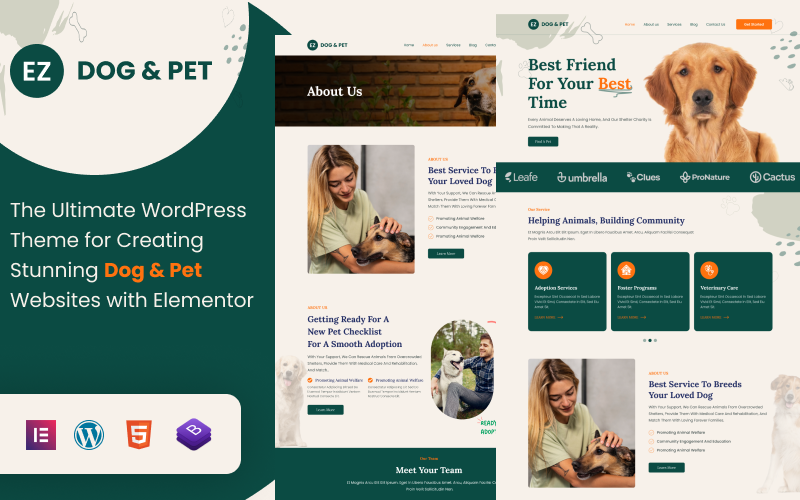
Design template: premium design from Template Monster —EZ Dog & Pets: Ultimate Dog & Pets Services WordPress Theme.
View Demo
Task
The veterinary clinic needed a website that would help:
- present the establishment in a professional manner;
- list the main veterinary services;
- introduce clients to doctors;
- explain what kinds of animals the clinic treats;
- post current contact information and the schedule;
- simplify the appointment scheduling process;
- work properly on smartphones;
- lay the groundwork for local SEO;
- promote specific services;
- continue to add new specialties, doctors, and branches.
It was important to quickly launch a professional first version without spending a long time developing standard modules for a veterinary website from scratch.
Our Approach
For this project, we used a professional design template created for veterinary clinics, pet care services, grooming salons, and pet services.
This allowed us to focus not on creating standard elements from scratch, but on more important tasks:
- service structure;
- intuitive navigation;
- according to the doctors’ assessment;
- mobile optimization;
- contact scenarios;
- trust blocks;
- opportunities for further development;
- preparing for local marketing.
The premium template serves as a technical and visual foundation that can be customized to match a clinic’s brand identity, real photos, areas of expertise, and internal processes.
Why a Veterinary Clinic Needs Its Own Website
Pet owners often seek help in situations where it’s important to quickly find:
- the clinic’s address;
- phone;
- hours of operation;
- the doctor on duty;
- available services;
- the option of same-day appointments;
- the right specialist;
- information about preparing for the procedure;
- directions to the clinic;
- method of recording.
Social media is great for news, photos, and communication.
But important information there quickly gets lost among all the posts.
The website brings all of this together in one place and serves as a central resource to which you can direct clients from:
- Google;
- Google Maps;
- advertisements;
- Facebook;
- Instagram;
- recommendations;
- local directories;
- partner pet stores;
- shelters;
- breeders;
- specialized communities.
The website should be helpful even before you make an appointment
The pet owner may not know the exact name of the veterinary service.
He can search for an answer based on a symptom or a situation:
- the animal refuses to eat;
- the dog is limping;
- The cat has become lethargic;
- A vaccination is required;
- Sterilization is required;
- You need to obtain a veterinary passport;
- The animal needs to be examined before traveling;
- there was a suspicion of poisoning;
- Laboratory testing is required;
- Consultation with a specialist is required.
This website is not intended to provide an online diagnosis.
His goal is to help people understand:
- which department to contact;
- how urgent the situation might be;
- how to sign up;
- what to prepare for the appointment;
- Who to call in an emergency.
Structure of Veterinary Services
You shouldn’t list all your services in a single long list on the home page.
You can create individual pages under:
- initial appointment;
- therapy;
- vaccination;
- spaying and neutering;
- surgery;
- dentistry;
- dermatology;
- ophthalmology;
- cardiology;
- orthopedics;
- laboratory diagnostics;
- ultrasound examination;
- X-ray;
- microchipping;
- preparation of veterinary documents;
- preventive checkups;
- treatment for parasites;
- inpatient care;
- emergency care;
- House call by a doctor.
The website should list only the services that the clinic actually provides.
The following pages are helpful:
- to better explain the service;
- prepare the client;
- respond to search queries;
- run ads;
- refer a person to the appropriate specialist.
Individual Service Page
Each service can be presented using a clear structure.
When people contact us
Conditions and symptoms for which pet owners most often make appointments.
What Happens at the Appointment
Assessment, information gathering, diagnosis, and follow-up recommendations.
How to Prepare Your Pet
Do I need to withhold food from the animal, bring documents, previous test results, or a list of medications?
What methods can be used?
Only the diagnostic and treatment methods that are actually available at the clinic.
What Factors Determine the Cost?
Type of appointment, required tests, procedures, medications, and the complexity of the case.
How to Sign Up
Phone, form, messaging app, or online booking system.
These pages help customers prepare better and reduce the number of repetitive questions directed at the administrator.
SEO Basics for a Veterinary Clinic
Potential customers may be searching for:
- a nearby veterinary clinic;
- a veterinarian in a specific area;
- veterinary care;
- vaccinating a dog;
- vaccinating a cat;
- spaying a cat;
- neutering a cat;
- veterinary surgeon;
- Ultrasound for animals;
- tests for animals;
- veterinary dentistry;
- a 24-hour veterinary clinic;
- emergency veterinary care.
Therefore, the website can be developed gradually through:
- individual service pages;
- doctors’ profiles;
- local pages;
- pages for different types of animals;
- answers to frequently asked questions;
- helpful articles;
- pages for preventive procedures;
- information about training;
- reviews;
- case studies that do not disclose personal information;
- internal linking;
- external references;
- Google profile.
This approach helps attract not only people who are already familiar with the clinic’s name, but also pet owners who are looking for specific help nearby.
Local Marketing
For a veterinary clinic, location is particularly important.
In many situations, the owner is looking for a place that’s easy to get to.
A website can be optimized for:
- city;
- district;
- residential complex;
- nearest settlements;
- individual branches;
- specific veterinary services in a particular location.
For local marketing, it’s important to ensure that the information on your website and in your Google Business Profile is consistent:
- title;
- address;
- phone;
- chart;
- categories;
- services;
- link;
- photos;
- Information about emergency care.
What the client received
As part of the completed project, the client received:
- a Ukrainian-language website for a veterinary clinic;
- mobile optimization;
- a professional, theme-based design framework;
- the WordPress content management system;
- the ability to edit text and photos;
- a framework for providing services;
- the ability to add new pages;
- sections introducing the clinic;
- contact blocks;
- a basis for forms of address;
- the opportunity to publish useful content;
- preparation for local SEO;
- readiness to launch the ad campaign;
- the ability to integrate analytics;
- a platform that can be further developed or handed over to another team.
Doctors’ Presentations
For a veterinary clinic, the veterinarians are one of the key factors in building trust.
On a specialist’s individual page, you can display:
- a photograph;
- name;
- specialization;
- education;
- experience;
- areas of focus;
- the types of animals the veterinarian treats;
- vocational training;
- participation in conferences;
- appointment schedule;
- available services;
- the record button.
It is important to use accurate and up-to-date information.
You shouldn’t use exaggerated headlines or guarantee treatment results.
Trust Blocks
Before seeking treatment, the pet owner can assess:
- the doctors’ experience;
- equipment;
- cleanliness;
- conditions of the animals’ stay;
- real photos;
- reviews;
- work schedule;
- the ability to record quickly;
- access to diagnostic services;
- clear contact information;
- method of communication after the appointment;
- Transparency in payment.
You can post the following on the website:
- photos of the clinic;
- doctors;
- equipment;
- information about specializations;
- reviews;
- documents;
- partners;
- admission rules;
- answers to questions;
- explanation of the treatment process;
- information about the storage of medical data;
- inpatient care.
Real photos from the clinic are more important than stock photos.
Online Registration
The next step in this development could be online registration.
The customer can choose:
- animal;
- service;
- doctor;
- date;
- time;
- branch;
- format of the request;
- method of verification.
A recording may be received:
- to the administrator;
- in the CRM;
- to the calendar;
- into a specialized veterinary system;
- in a messaging app;
- to the company email address.
Before integration, you need to determine:
- where the current schedule is stored;
- who verifies the entry;
- how urgent requests are handled;
- what happens when it is canceled;
- Is an advance payment required?
The online appointment form is not intended to replace the phone for emergencies.
Emergency Care
If a clinic provides emergency or 24-hour care, this should be clearly indicated.
You can post the following on the website:
- emergency hotline number;
- emergency appointment schedule;
- address;
- route;
- a list of situations when you should call immediately;
- an explanation of whether prior approval is required;
- information about the clinic’s available services.
For symptoms that may be life-threatening, the website should direct users to contact a doctor immediately, rather than asking them to wait for a response via the form.
If the clinic is not open 24 hours a day, this should be stated explicitly.
Pricing Information
You can post the following on the website:
- the base fee for the initial visit;
- follow-up visit;
- vaccination;
- standard procedures;
- laboratory services;
- diagnostics;
- document processing;
- inpatient care;
- House call.
That said, the final cost of treatment may depend on:
- the animal’s condition;
- necessary tests;
- medications;
- the duration of the procedures;
- type of anesthesia;
- the complexity of the procedure;
- hospitalization.
Therefore, it is important to explain the difference between the base price of the service and the total cost of a specific case.
Preparing for the Appointment
A separate section can help the client prepare properly.
For example:
- What documents should I bring?;
- Do I need to bring a veterinary passport?;
- Is it okay to feed the animal?;
- how to transport a cat;
- Is a muzzle required?;
- Which preliminary test results should be used?
- what medications the animal is currently taking;
- How to prepare for an ultrasound;
- how to prepare for surgery;
- What to do after getting vaccinated.
Such materials must comply with the specific clinic’s policies and the recommendations of its doctors.
Pages by Animal Type
If the clinic treats different types of animals, the website can be organized by specific specialties:
- veterinary care for dogs;
- veterinary care for cats;
- help for rodents;
- treatment of ornamental birds;
- helping reptiles;
- veterinary care for exotic animals;
- Services for farm animals.
You should not create pages for animal species that the clinic does not actually treat.
Dedicated pages help highlight doctors’ specific areas of expertise and attract more targeted inquiries.
Prevention and Follow-up Visits
The veterinary clinic doesn’t just treat emergency cases.
The website and digital infrastructure can support preventive care:
- vaccination;
- treatment for parasites;
- preventive checkups;
- dental checkup;
- laboratory tests;
- management of chronic conditions;
- postoperative follow-up;
- Care of elderly animals.
With the owner’s consent, we can set up reminders for:
- the next vaccination;
- follow-up examination;
- taking medications;
- processing;
- follow-up tests;
- routine procedure.
This helps maintain the animal’s health and fosters a long-term relationship with the clinic.
Useful Content
A veterinary clinic’s blog can help:
- answer frequently asked questions;
- prepare clients for their appointments;
- attract search traffic;
- demonstrate the competence of doctors;
- reduce the spread of dangerous advice;
- continue prevention efforts.
These could be articles about:
- vaccination;
- nutrition;
- care;
- parasites;
- seasonal risks;
- preparation for surgery;
- post-procedure care;
- first aid;
- traveling with pets;
- microchipping;
- veterinary documents;
- caring for puppies and kittens;
- Caring for elderly animals.
The content should not encourage the user to self-diagnose or replace a doctor’s examination.
Google Maps
For a local veterinary clinic, a Google Business Profile can be one of the main sources of leads.
The following can be displayed in the profile:
- address;
- route;
- phone;
- hours of operation;
- photos;
- services;
- reviews;
- rating;
- link to the website;
- update;
- Answers to the questions.
It is especially important:
- check the schedule regularly;
- update information on holidays;
- respond to reviews;
- add real photos;
- Do not indicate 24-hour operation if it is not available;
- coordinate communications with the website.
Reviews and Reputation
Pet owners often check reviews before making an appointment.
The website can display:
- verified reviews;
- links to independent platforms;
- customer stories, with their consent;
- evaluations of specific aspects of service;
- Responses from the clinic.
In the veterinary field, you should not publish details of treatment without the owner’s permission.
Furthermore, one should not assume that a single positive case guarantees the same outcome for all animals.
The Role of Social Media
Facebook, Instagram, YouTube, and TikTok can support the website through:
- meeting with doctors;
- care tips;
- seasonal reminders;
- clinic news;
- photos of the establishment;
- explanation of procedures;
- patient records, with the consent of the owners;
- information about the schedule;
- Go to the recording.
Social media helps maintain regular contact, while the website provides organized information about services, doctors, prices, and appointment policies.
Site 4 biz Growth can integrate a website, Google Maps, SEO, content, social media, advertising, and analytics into a single customer acquisition system.
Advertising Veterinary Services
It makes sense to run ads not only for the home page, but also for specific services.
For example:
- vaccination;
- sterilization;
- initial appointment;
- laboratory diagnostics;
- Ultrasound;
- dentistry;
- dermatology;
- document processing;
- microchipping;
- preventive checkup.
For each ad, you should create a relevant page that includes:
- a description of the service;
- by a doctor;
- training;
- the price or the principle by which it is determined;
- address;
- schedule;
- the record button.
Advertisements should not use fear, exaggerated promises, or guarantees of a cure.
Website for a network of clinics
If a company has several branches, the website can be expanded through separate pages for each location.
On each clinic’s page, you can display:
- address;
- map;
- chart;
- phone;
- doctors;
- available services;
- equipment;
- photos;
- reviews;
- the record button.
This helps promote each branch individually and direct customers to the nearest location.
Integration with internal systems
As the site develops, it can be integrated with:
- CRM;
- the veterinary information system;
- calendar;
- telephony;
- via corporate email;
- messaging apps;
- accounting software;
- laboratory;
- online payment;
- reminder system.
Possible transfer:
- applications;
- customer data;
- information about the animal;
- recording time;
- the selected service;
- Sources of the appeal.
Medical data and treatment histories should not be transmitted via unsecured forms or regular messages without appropriate security measures.
Online Stores as a Future Trend
If necessary, the website can be expanded to include sales of:
- veterinary feed;
- skincare products;
- products authorized for online sale;
- accessories;
- postoperative care products;
- parasite treatments;
- gift certificates.
Before adding a product category, you must verify the following:
- the legality of the sale of specific goods;
- storage conditions;
- requirements for the distribution of medications;
- delivery;
- the validity of the balances;
- Responsibility for consultations.
Not every veterinary drug can be sold as a regular product.
Website for an animal shelter or pet service
The thematic framework can also be adapted for other projects in the field of animal care.
For example:
- shelter;
- adoption center;
- a hotel for dogs and cats;
- grooming salon;
- canine training center;
- animal rehabilitation center;
- dog-walking service;
- day care.
However, the structure of such a website must be tailored to a specific business model.
For a shelter, the main activities may include:
- to take an animal;
- to help;
- become a volunteer;
- deliver the feed;
- to continue treatment.
For the hotel:
- view the terms and conditions;
- select the placement format;
- check the requirements;
- reserve a seat.
For a veterinary clinic:
- find a service;
- choose a doctor;
- sign up;
- Get directions;
- call in an emergency.
How to Further Develop the Website
The next steps could be:
- individual service pages;
- doctors’ profiles;
- pages by animal type;
- online registration;
- integration with CRM;
- calendar;
- reminder;
- price list;
- emergency care page;
- branch pages;
- Google Business Profile;
- reviews;
- knowledge base;
- blog;
- video;
- online payment;
- customer portal;
- secure access to documents;
- a system for repeat requests;
- email;
- messaging apps;
- local SEO;
- Google Ads;
- Meta Ads;
- remarketing;
- multilingualism;
- online store;
- record analytics.
The specific direction of development depends on the number of doctors, specialties, branches, and the clinic’s internal processes.
How the customer saves money in the future
Using a professional, industry-specific template allowed us to avoid spending time and money on building standard elements of a veterinary website from scratch.
The customer saves:
- time required for the initial startup;
- budget for the basic design;
- costs associated with mobile adaptation;
- time spent creating new pages;
- funds for full processing when adding a service;
- the cost of a separate website for each doctor or branch;
- the administrator’s time spent providing repeated explanations;
- a budget for future local SEO;
- costs associated with a closed platform;
- funds for a full restart when the recording is connected.
The website can grow gradually along with the team, areas of expertise, equipment, and number of locations.
Why We Chose a Premium Design
Veterinary clinic websites have many common elements:
- the main proposition;
- service pages;
- doctors;
- information about the clinic;
- reviews;
- entry;
- price list;
- map;
- contact information;
- useful resources;
- mobile version.
Building all of these elements from scratch would increase the timeline and budget, but it wouldn’t necessarily lead to a better result.
Thanks to my professional background, I was able to get right to the heart of the matter in just one week:
- clinic presentations;
- service structures;
- building trust;
- easy contact;
- local promotion;
- further development of the record.
Order Strategy for promoting veterinary services
Do you need a website for a veterinary clinic or pet care service?
Site 4 biz Build creates websites for:
- veterinary clinics;
- veterinary clinics;
- private veterinarians;
- veterinary laboratories;
- diagnostic centers;
- shelters;
- adoption centers;
- pet hotels;
- grooming salons;
- dog training centers;
- pet care services.
We can help:
- create a new website;
- replace the outdated one;
- organize services;
- introduce the doctors;
- add a price list;
- enable online registration;
- create pages for the branches;
- Set up a Google Business Profile;
- set up analytics;
- develop local SEO;
- launch an ad;
- Integrate the website, maps, social media, and the booking system into a single customer journey.
Write about your projectgoals, available resources, and we will help you achieve them.